How to Judge Quality Countertop Work
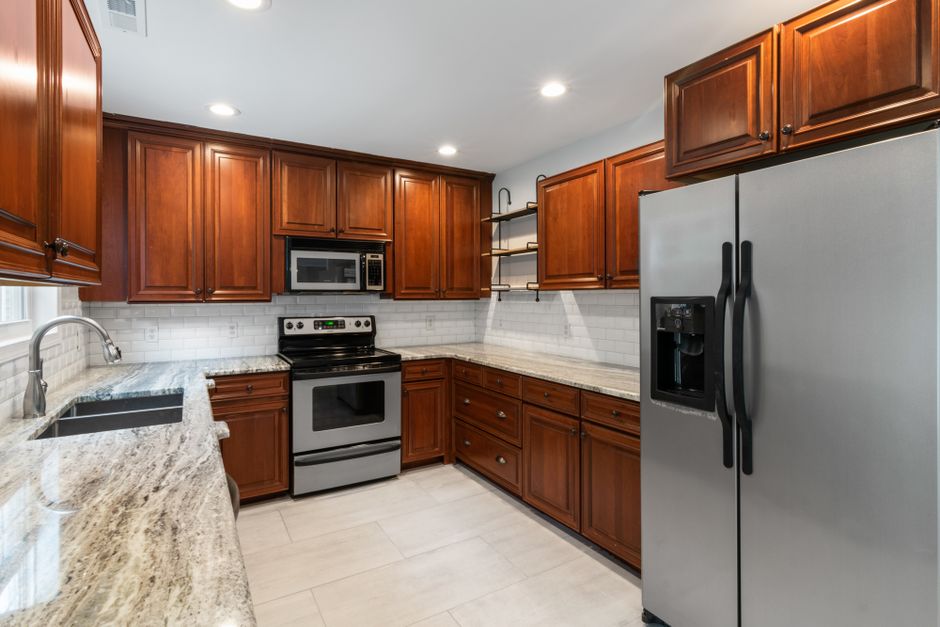
Two finished tops that look identical from the doorway can be a quarter inch apart in how they sit, how the seam closes and how the edge was run. Judging countertops in Savannah, GA starts with checking those details, and the checks at countertops savannah aware center run tighter than the usual walk-through, which stops at the color and the sink.
Look at the whole slab first

A small sample overstates how uniform the stone is. Granite, quartzite and marble move in color and veining across a single slab, and quartz carries its own pattern drift. Viewing the full slab shows the real range before anyone cuts. Where a remnant is being considered for a vanity or a bar top, the same rule holds. Stand at the slab, not at the sample tray, and mark the areas you want at the front of the kitchen.
Seam placement is decided before cutting
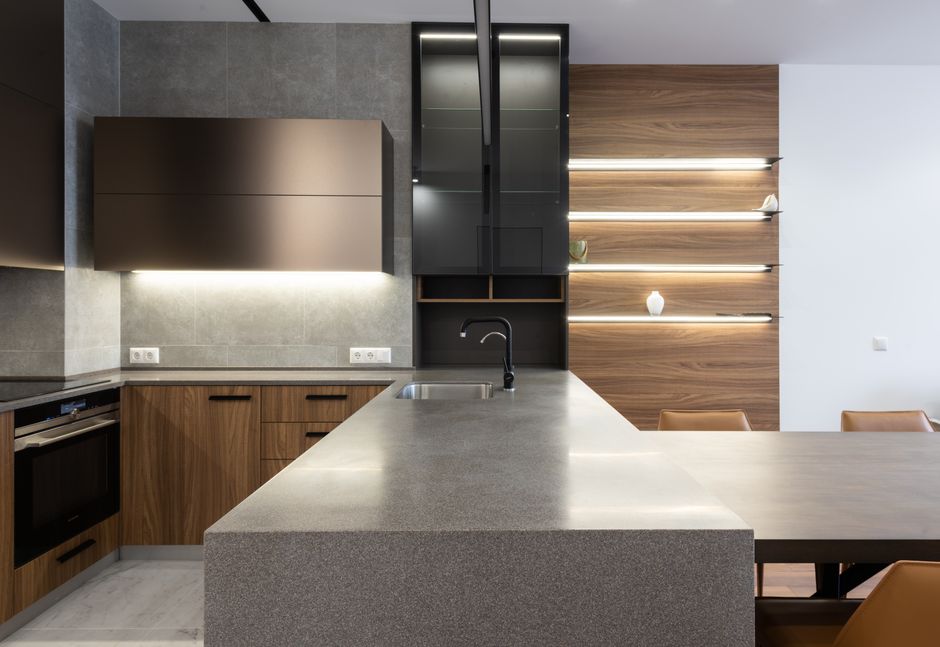
Seam placement should be discussed in advance and settled on the template drawing. Keep the seam away from narrow sections and away from the center of the sink where possible, because those spots carry the most stress. A well finished seam is flush to the touch, tight, and filled with adhesive closely matched to the surface color. A visible seam does not by itself mean poor work, since dark stone and busy patterns show a line differently. Run a fingertip across it. A ridge or a gap you can catch a nail in is the problem, not the mere presence of a line.
Templating and the sink cutout
Templating is where the fit is won or lost. Ask how cutout corners are radiused. A tight inside corner concentrates stress and is where cracks start, so a generous radius matters on every sink and cooktop opening. Then look at the sink reveal. Whether it is positive, negative or flush, it should be uniform all the way around the bowl. A reveal that wanders from one side to the other points to a cutout or a mounting that was off.
Edge profile and overhang support
The edge profile should be consistent along its full length, with even polish and no chips. That applies to an eased edge, a bullnose, or a waterfall edge on an island end. Run a hand along it and look along the line with a low light. Ask how the fabricator supports every overhang. Thicker stone does not exempt a long overhang from needing support, and the answer should name brackets, corbels or a plywood sub-top rather than a general assurance. Soapstone, porcelain and solid surface each have their own limits, and laminate or butcher block behave differently again.
Checking the finished top
Once installed, set a level on the top. It should read level and sit without rocking. Check the seam, the reveal, the edge and the backsplash joint in daylight, not only under kitchen lights. In older Savannah houses near Forsyth Park or River Street, walls and floors are rarely square, so expect scribing at the wall and shimming below. Those adjustments should leave a clean, even line, not a caulk bead covering a gap.